Douglas County 4-H Youth Thrive
Nickie H., 4-H Youth Development Agent
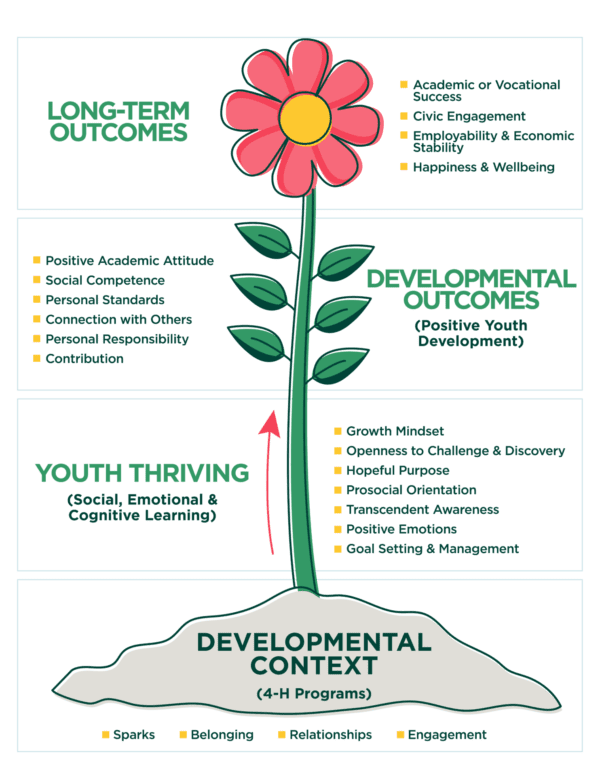
For many young people, 4-H begins with a project—a first animal, a photography entry, or a science experiment. But what keeps them involved is something much deeper: the chance to discover who they are, what excites them, and how they can make a difference. In Douglas County, 4-H isn’t just about projects and ribbons—it’s about helping youth thrive.
That’s the purpose of the 4-H Thriving Model, a research-based framework that guides youth development work nationwide. It explains how high-quality programs, supportive relationships, and meaningful opportunities help young people discover their sparks, build life skills, and make lasting contributions to their communities.
The Thriving Model begins with sparks—the passions or interests that light a fire in young people and give them a sense of direction. In Douglas County, sparks can look like many things: caring for livestock, experimenting with robotics, exploring photography, or stepping up to lead a club meeting.
One member may discover a spark in animal care that leads to studying veterinary science. Another may find confidence in public speaking while giving a project talk.
These sparks keep youth motivated and connected, often guiding their education and career paths. Equally important are the developmental relationships that 4-H provides. Club leaders, volunteers, and mentors are vital in helping youth feel supported, challenged, and encouraged to grow. When young people know they belong and have adults who believe in them, they are more likely to take risks, build confidence, and keep striving.
This point was highlighted in a recent We Are Extension podcast episode, “Thrive Model with Nickie and Dr. Matthew.” In the episode, 4-H Youth Development Agent Nickie Harding and alum Dr. Matthew Kelso shared how relationships shaped their own 4-H journeys. Dr. Kelso, now a veterinarian and 4-H leader, explained how his spark in animal science was nurtured by supportive adults who encouraged him along the way.
Through 4-H, Douglas County youth practice goal-setting, problem-solving, and reflection—skills that prepare them for whatever future path they choose. Parents often notice that after joining 4-H, their children become more responsible, independent, and confident.
And it doesn’t stop with individual growth. Thriving youth also give back. In Douglas County, members lead food drives, mentor younger 4-H’ers, and work on community service projects that make a real impact.
“The Thriving Model helps us make sure every member feels they belong, discovers their spark, and has the tools to succeed,” Nickie said. “When youth thrive in 4-H, they thrive in life.”
This article is from the 2025 K-State Extension Douglas County Fall Newsletter publication.