Soil Health Principles 3
Cover and Armor the Soil
Margit K. , Agriculture Agent
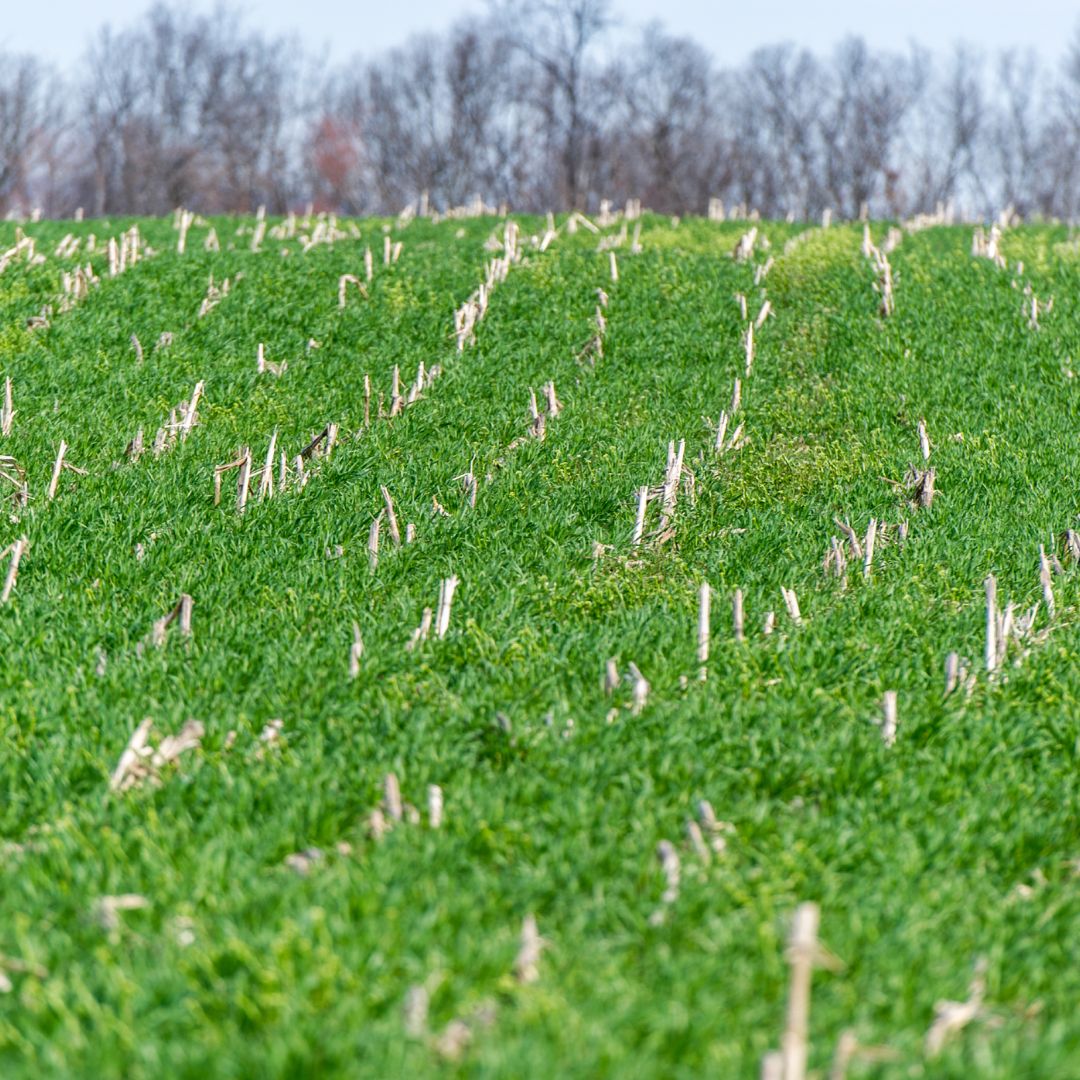
Nature knows best. Have you ever noticed that most weeds in a pasture or farm yard tend to grow in ‘bare spots’? Or the way annual weeds sprout quickly after you disc a field or till a garden? Turn your back and nature fills the void with a flush of seedlings that sprout quickly. This is no accident. Nature knows best to cover her most precious resource. Soil.
Nature abhors a vacuum, especially when it comes to keeping the soil covered. So why should our farming or gardening practices be any different? No-Till planting certainly pays by reducing tillage and minimizing disturbance to the soil surface. No-Till planting also affords the ability to plant green into existing cover crops, leaving behind a thick residual through the growing season. This covers and armors the soil. From what, you might ask? Sun, heat, and oxidation are contributing factors, for one thing.
Not only is exposed soil 100 times more likely to succumb to wind and water erosion, but exposed soil is also a heat sink. Being black, the soil temperatures over bare soil are intense…up to 30 degrees hotter than soil covered with the cool, green foliage of a crop or cover crop, or thatch in a pasture or dead mulch residue left by a terminated cover crop. Solar radiation oxidizes (burns) exposed soil organic matter and kills microbial life in the top few inches of soil, reducing water holding capacity and shifting the nutrient availability for growing crops.
Dig through the thatch or residual layer and you can find a soft, moist layer of microbially active soil. Covered soil retains moisture. Exposed soil breaks the micro-water cycle, and increases risk of drought.
Exposed, bare soil is also prone to compaction from rainfall. Raindrops hitting bare soil at 20 miles per hour, compact bare soil faster than if they first hit residue or foliage. If water is not infiltrating, the first rainfall event will create a claypan in the top 1 - 2 inches, since tiny clay particles rise to the surface when water puddles over bare soil. The next rainfall event leaves that hardened soil more vulnerable to further erosion. Together with increased soil temperatures, oxidizing organic matter, and increased risk of wind and water erosion, it's no wonder nature prefers to keep the soil covered.
What does a covered armored soil look like, and why is it important?
Think of that ‘aura’ or lofty feel you get walking across a healthy pasture and hayfield. You can almost feel that spongey layer beneath your boots, as you walk across thick grass. That’s the best kind of cover. For the grassland, this ‘bounce’ is created by a healthy layer of ‘thatch’. Dig Down. See the decaying foliage 1 -2 inches thick, sometimes 3 inches; decaying leaf material from the previous year’s growth of forage that was never consumed, trampled by livestock, or shattered foliage from haying. It provides shade, moisture retention and a home for the soil food web of micro- and macrofauna - earthworms, beetles of all kinds, including dung beetles, shelter for arachnids, Aruna (frogs and toads), and other arthropods.
Biologically active fields with high organic matter might also feel like walking over air, yielding a slight bounce with each step. This is most often the result of a combination of well managed cover cropping, with some integrated livestock or terminated cover crops leaving a thick residual layer prior to No-Till planting of corn or soy.
When residual or armor covers the soil, there is less likelihood of the blessed weeds staking their claim, and less need for costly herbicides to eliminate them. When there is a nice thick thatch layer in the pasture, and a biologically active nutrient cycle within the soil food web, there is a decrease of woody encroachment (those junipers!), getting a foothold.
When we consider the multidimensional benefits of keeping our soils armored, it goes deeper than the surface of the soil. Beetles and worms pull the residue deep into the soil, providing harborage and structure as well as food for all of manner of fungi and decomposers. The soil food web of arthropods, microbial and fungal contractors are at work, decomposing lignans, literally building soil - creating tunnels and air pockets that allow access of ‘free’ Nitrogen. Dinitrogen (N2) enters soil as part of the nitrogen cycle. This dinitrogen is transformed into ‘free fertilizer’, as the creator intended, feeding microbes, like bacteria and archaea, whose nitrogenase enzymes are the only force of nature to pull apart the triple bond of dinitrogen (N2) the same nitrogen gas that fills our lungs every day. Their role is critical in transforming an inert gas (N2) into plant available nitrate (NO3) or ammonium (NH4)…no other synthetic nitrogen fertilizer behaves the same way and often has far more deleterious effects on the soil microbiome and waterways.
Consider ways to be reseeding pastures or planting cover crops this September through November. Build a home for the soil food web to thrive and lift a burden. Cover the soil and it will return the favor by ‘paying the farmer and rancher back ‘ by assisting with access to ‘free’ nitrogen fertilizer next spring.
For more information about fall cover crops, contact the Douglas County Agriculture Agent, Margit Kaltenekker at margitk@ksu.edu.
Additional Suggested Resources
SD Innovators Build Affordable DIY Roller Crimper
SARE Affordable Roller Crimper Development Guide Project
Plans and Dimensions for Roller-crimper Build
This article is from the 2025 K-State Extension Douglas County Fall Newsletter publication.