Looking Ahead to Tomato Troubles
Sharon A., Horticulture and Natural Resources Agent
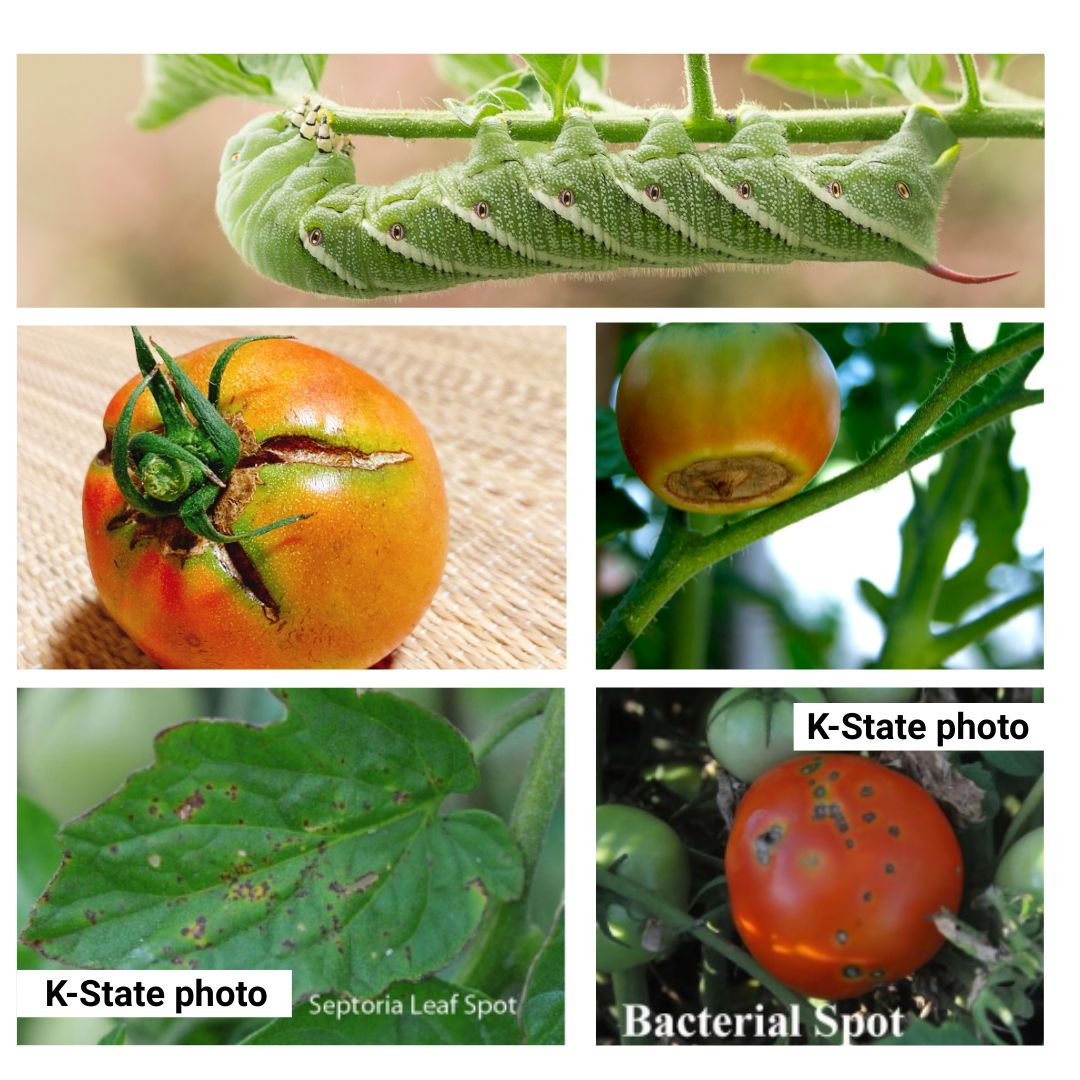
It’s been a fantastic spring for gardeners, and many of us eagerly anticipate a lush, flavorful summer tomato crop. From pests to disease to environmental stress, tomatoes can be finicky, but with the right care, you can keep your plants healthy and productive. Below are some common issues home gardeners face with tomatoes.
Tomato cracking
While there are tomato varieties that are resistant to cracking, managing soil moisture can help. Cracking often occurs when abundant water is provided to the plant after a dry spell, causing the fruit to swell and the skin to crack. To reduce cracking, maintain consistent soil moisture levels, and mulch around your tomato plants to minimize moisture loss. Excessive nitrogen and exposure to direct afternoon sun also contribute to cracking.
Blossom end rot
While the cause of blossom end rot is a calcium deficiency, your soil likely has plenty of calcium. Rapid fluctuations in soil moisture and air temperature, drought stress, excessive nitrogen, and root damage can all interfere with the necessary uptake of calcium during fruit production. While you can’t do much about rapid weather swings, you can maintain even soil moisture, refrain from using nitrogen once fruits have developed, and be careful not to damage roots while hoeing.
Leaf spot and blight
Septoria leaf spot and early blight are fungal diseases that cause leaf spots and eventually leaf loss. Defoliation of your plants can reduce yield and result in sunscalding of your tomatoes. Warm temperatures, abundant rain, and high humidity favor both diseases. Avoid overhead watering and mulch around the plants to prevent splashing water on the lower leaves. See references below for chemical control options.
Bacterial speck and spot
Bacterial speck and spot are diseases that cause black spots on tomatoes. Avoid overhead watering and mulch around the plants to prevent splashing water on the lower leaves. There are copper-based chemical treatments available, but they have inconsistent results.
Hornworms
Nothing is more disappointing than inspecting your tomato plants and noticing that most of the upper part of the plant is gone. Look carefully for the camouflaged tomato or tobacco hornworm. When you find it, and do find it quickly, pluck it off your tomato plant (it can’t bite or sting). You can do a couple of things next – kill it right away, or keep it to see if it is infested with the larvae of beneficial parasitoid wasps. If the hornworm is infested, it will look like it has many white “eggs” on its back (these are the cocoons of the wasp). Putting the dying hornworm back in your garden at this stage will allow the wasps to hatch and help prevent other hornworms from destroying your tomato plants.
Good horticultural practices for a successful tomato crop this summer.
- No overhead irrigation.
- Mulch around your plants and maintain even soil moisture.
- Monitor for pests and disease to minimize loss.
Prepping for next summer:
- Remove all plant debris from the garden. Fungal diseases overwinter on plant debris or on weeds that remain in the garden.
- Get a soil test. Aim for a soil pH of 6.5. If the soil pH is too high, add sulfur according to the recommendations in your soil test.
- Purchase disease-resistant varieties.
- Rotate the planting area for your tomatoes. Even if you have a small space, switch up which side of the garden you plant your tomatoes, use new potting soil, or switch which pots you plant your tomatoes in.
- Follow spacing recommendations so that there is airflow between your plants.
References:
L721 Tomato Leaf and Fruit Diseases and Disorders
This publication is from the 2025 K-State Research and Extension Douglas County Summer Newsletter.