Part 2. Soil Health Principles: Minimize Disturbance
The NRCS came forth with Soil Health Principles through work with Jay Fuhrer at Menoken Farm between 2014-2017. Soil health and conservation continues to evolve as more producers succeed in adopting these management practices on their farms. NRCS defines Soil Health as: “The continued capacity of soil to function as a vital living ecosystem that sustains plants, animals, and humans. Healthy soil gives us clean air and water, bountiful crops and forests, productive grazing lands, diverse wildlife, and beautiful landscapes” (USDA. Soil Health Natural Resources Conservation Service, Article Link).
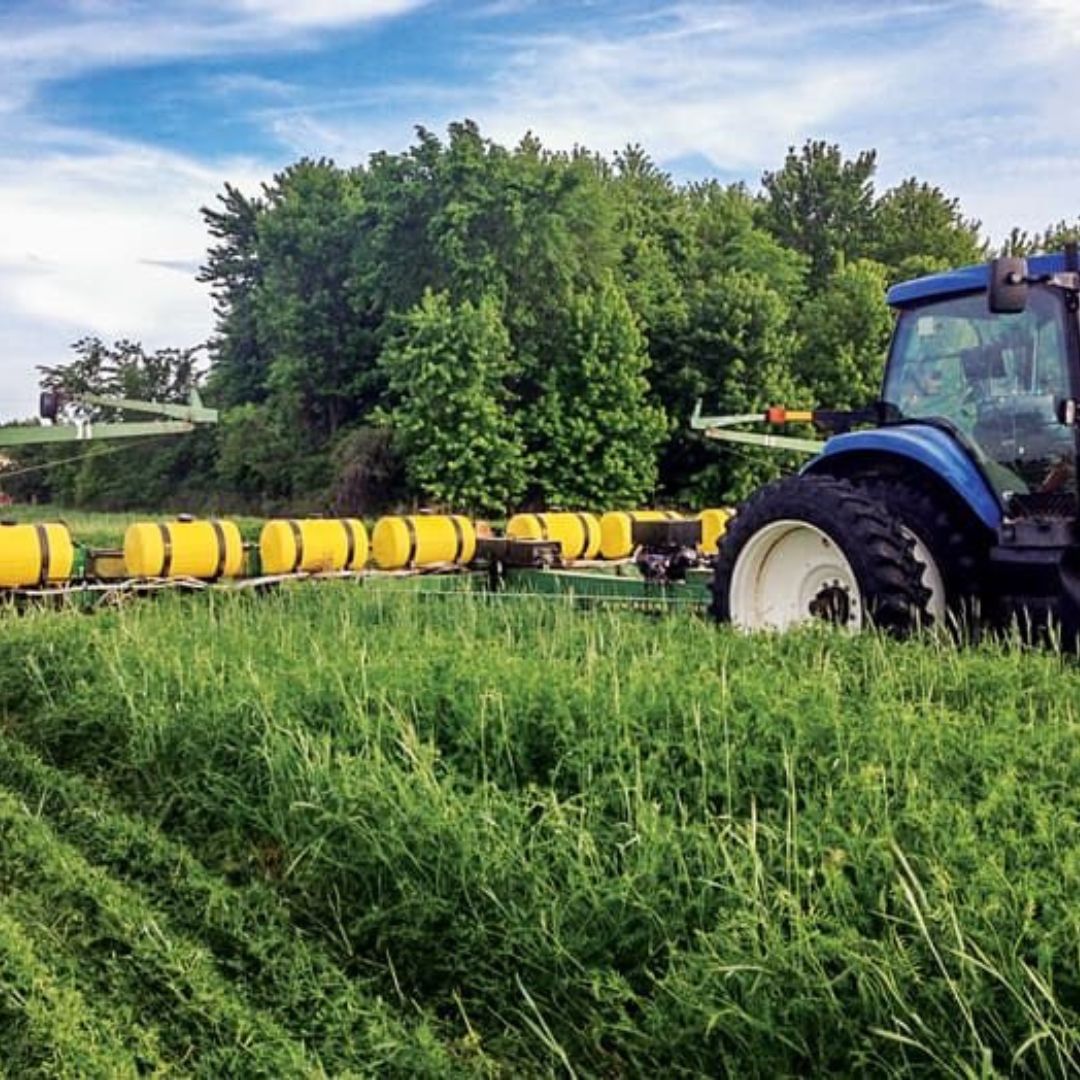
One of the first and most important practices to facilitate soil’s function as a vital living ecosystem is to minimize soil disturbance…whether at the biological, chemical or physical level.
Biological disturbance - from such things as overgrazing, or excess burning of grasslands, decrease plants’ ability to complete optimal photosynthesis and carbon capture, disrupting soil microbial life downstream. Biology can also be impacted by Chemical disturbance.
Chemical disturbances - are impacts such as excess fertilizer or pesticide applications that can disrupt the biological balance in the soil food web (resulting in a biological disturbance). Certain herbicides and nitrate ammonia are known to have an impact on soil life, affecting earthworms and mycorrhizal fungi, critical organisms for soil nutrient cycling.
Physical disturbance (through over tillage) is the most ubiquitous form of disturbance, having the most direct impact at various levels of the soil profile affecting the soil food web (macro and micro-organisms). Soil consists of roughly 45% mineral, 25% air and 25% water, and 0-5% organic matter. The portions of air and water are directly related to pore spaces created by water-stable aggregates derived from the combination of plant root exudates, and the soil-microbiome. Soil aggregates literally hold the soil mineral particles together, while creating a hospitable environment for soil microbial life essential to plant nutrient cycling.
As we witnessed from dust storms across Kansas earlier last March, some of the very real impacts of tillage include:
- Wind Erosion: transporting soil and nutrients to off-site locations; caused by poor aggregate structure, exposed or bare soil; impacts air quality, human and animal health.
- Water erosion: transporting soil particles, nutrients and water to off-site locations; negatively impacts water quality and drought conditions. Water that does not infiltrate fails to recharge subsoil moisture and groundwater reserves, critical to both the micro and macro water cycles.
- Ponding, puddling or pooling water after rain is a direct indicator of poor infiltration, poor aggregate structure, leading to droughty soils, and increased soil run-off.
- Crusting: as loose finer soil particles rise to the surface during ponding on the soil surface; restricts plant emergence, affecting stand and yield.
- Decreased soil organic matter: through oxidation of soil during tillage, results in a decreased capacity of the soil to infiltrate water, decreased plant nutrient cycling,
decreased rates of plant germination and emergence, and decreased drought resilience.
The good news is there are ways to reduce tillage and improve soil function through No-Till planters, use of cover crops (that provide ‘natural tillage’ – through tap rooted species), diverse rotations and integrating livestock. Compounding benefits arise from minimizing soil disturbance:
- Aggregate Stability – provides a healthy home to soil organisms, increased tilth, allowing easy root penetration for plants.
- Pore Spaces - created from soil aggregates, increase free nitrogen from the air, and increase water infiltration, recharging our aquifers.
- Plant root exudates (carbon sugars) - stored in deeper layers of the soil – increasing the soil’s cation exchange capacity essential to plant nutrient cycling.
- Soil Organic Matter- the ‘Mother of All’. Organic Matter is the foundational network for all parts of the soil food web, where all life emerges – between plant roots, bacteria, protozoa, fungi and all other macrofauna. It is derived from and constitutes the combination of all the above, and more. This layer of the soil is most easily destroyed by tillage, though easily recreated by following the other soil health principles to be explored further: soil armor, living roots, diversity and livestock.
This publication is from the 2025 K-State Research and Extension Douglas County Summer Newsletter.