Soil Health Principles 5: Increase Biodiversity
Margit Kaltenekker, Agriculture Agent
Of all the soil health principles, increasing biodiversity remains one of the most enigmatic and elusive. If you pause long enough to look and listen with all your senses, you may be surprised to notice the variety and diversity of life forms above ground within your farm ‘ecosystem’. Or perhaps, like me, you may notice the absence of certain life forms — such as the near disappearance of Brown Leopard Frogs and American Toads in the river bottoms where I live. Twenty years ago, millions of amphibians in the Order Anura covered the fields and crowded the roads during warm spring and summer evenings. Today, they are essentially gone. Why? Sometimes our actions have unintended consequences removed from time and space that make it difficult to connect the cause and effect. One cannot help but think there are connections to agricultural practices causing harm. Does this also help explain the decreased number of snakes, rodents, and other species dependent upon amphibians as a primary food source? Or losses of other pollinators, insects and spiders we aren’t even aware of?
What is biodiversity? At what scale should we be concerned? Why is it so important to increase biodiversity on our farms? And how can we do so while balancing the many demands of agricultural production?
There are multiple levels at which biodiversity can be considered, including genetic diversity within a species; species diversity within an ecosystem; functional diversity (the ecological role or niche each organism fills); ecosystem diversity (grassland, woodland, wetland, forest); and habitat diversity (riparian corridors, meadows, ponds, hedgerows, and native prairie), to name a few.
A good place to begin is by considering ecological context — returning to the first article in this series — and reflecting on the grassland biome in which we live here in Kansas. Understanding the natural history of a place helps us recognize which organisms “belong here,” the ecological roles they serve, and how human actions influence the ecosystem upon which agriculture ultimately depends. Biodiversity is perhaps best understood as the interconnected web of life through which ecological systems function.
As American conservationist and wildlife biologist Aldo Leopold once wrote, “A thing is right when it tends to preserve the integrity, stability, and beauty of the biotic community. It is wrong when it tends otherwise.” Through A Sand County Almanac, Leopold offered a powerful vision helping us better understand our place within the natural order of things.
As farmers and ranchers, we must decide whether we will care for and manage the land in ways that work in harmony with ecological principles. Producers who do so often experience compounding benefits far beyond the individual practices themselves — including increased livestock health, reduced pest and disease pressure, greater pollinator diversity, increased wildlife, improved water quality, and increased resilience to drought and weather extremes.
Programs such as the Conservation Reserve Program, and Habitat First have provided important support to producers seeking to preserve and restore diverse habitats. The benefits of conservation and restoration are multiple: greater diversity at all levels; decreased soil and water pollution; cleaner waterways; improved wildlife and bird habitat; and increased resilience to drought and climate variability.
While biodiversity is often easiest to observe above ground through plants, birds, pollinators, amphibians, or wildlife, some of the most important diversity exists below ground within the soil microbiome itself. Healthy soils contain vast populations of bacteria, fungi, protozoa, nematodes, arthropods, archaea, and other microorganisms that help drive nutrient cycling, build aggregate stability, increase water infiltration, and strengthen plant resilience.
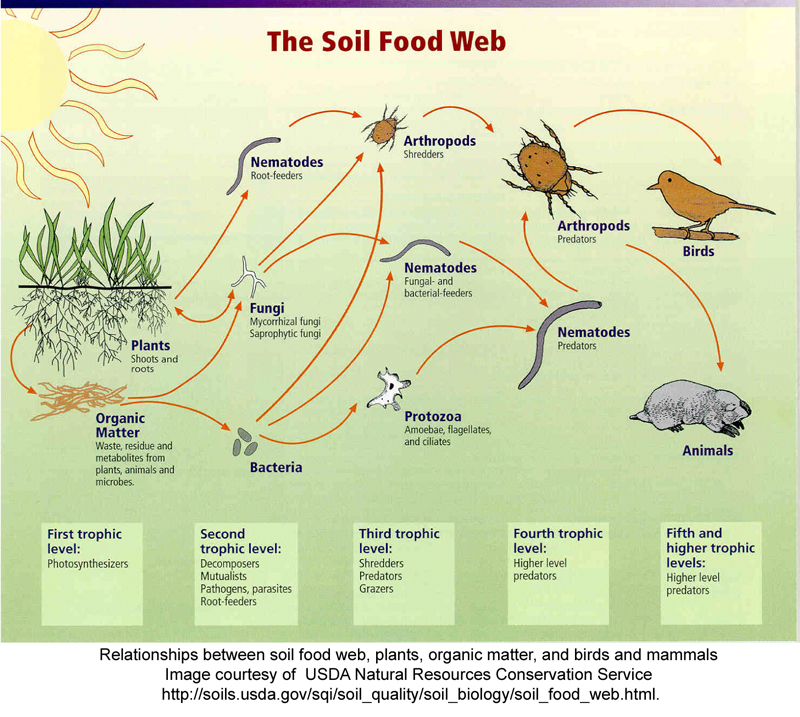
Scientific insights advanced through the life work of the late Dr. Elaine Ingham and others studying the soil food web helped broaden understanding of the complex relationships between plants and soil microbial communities. While it had long been understood that legumes (peas, clovers, alfalfa, soybeans) form symbiotic relationships with Rhizobia bacteria capable of fixing atmospheric nitrogen into plant-available forms, more recent research has expanded awareness of the biological interactions occurring within healthy soils. Many prairie grasses and perennial plants, for example, tend to support more fungal-dominant soils, especially populations of arbuscular mycorrhizal fungi that help plants access phosphorus, micronutrients, and water through underground networks. Members of the Brassica family (radishes, turnips, canola), by contrast, generally do not form mycorrhizal associations, illustrating that plant families differ significantly in how they interact with soil biology. These insights helped inspire broader interest in multi-species cover cropping, as regenerative producers increasingly recognize that diverse plant communities are often more resilient and biologically functional than monocultures. Through fungal and microbial networks below ground, plants influence nutrient cycling, water relations, and overall ecosystem stability.
Amid increasing pressure to manage costs and maintain profitability within our agricultural landscapes, there are several key practices producers can implement to help increase biodiversity:
- Apply the Soil Health Principles:
- Know your context
- Minimize disturbance
- Cover or armor the soil
- Keep living roots in the ground as close to year-round as possible
- Increase biodiversity
- Integrate livestock
- Plant more cover crops — Diverse cover crop (multispecies) mixtures and ‘food plots' are among the best ways to increase biodiversity both above and below ground.
- Consider intercropping or strip cropping to reduce pest and disease pressure associated with monocultures.
- Diversify crop rotations — Producers may discover opportunities to incorporate small grains, legumes, forage crops, or specialty crops into existing systems.
- Use adaptive grazing practices to keep livestock moving across the landscape while protecting selected areas during nesting seasons for grassland birds. Audubon’s “Bird Friendly Beef” label provides a unique opportunity for direct marketing into environmentally conscious consumer markets.
- Plant prairie meadow buffers and restore habitat — Conservation and agroforestry programs may also assist producers interested in establishing fruit and nut-bearing shrubs and trees beneficial to birds, pollinators, and wildlife. Pollinator Partnership, Ducks Unlimited, and Quail Forever are examples of programs supporting these efforts.
- Incorporate composts and biological inoculants thoughtfully — Whether through compost extracts, seed inoculants, effective microorganisms, or indigenous microorganism collections, biological amendments may help support microbial diversity and nutrient cycling during early years of transition. As with any input, replicated test strips and careful observation remain important.
Increasingly, producers are also utilizing biological soil assessments such as PLFA (Phospholipid Fatty Acid Analysis), soil respiration testing, and newer genomic sequencing tools to better understand the broad functional groups present within their soils. These tools can help identify whether soils are dominated by bacterial or fungal communities, assess biological activity, and guide management decisions intended to support greater ecosystem function.
When we work to increase biodiversity, there are compounding ecological and economic benefits. Healthy ecosystems tend to become more resilient, productive, and efficient over time because management practices increasingly support the biological functions upon which agriculture ultimately depends — strengthening resilience, productivity, and long-term agricultural prosperity.