Soil Health Principles 6: Integrate Livestock
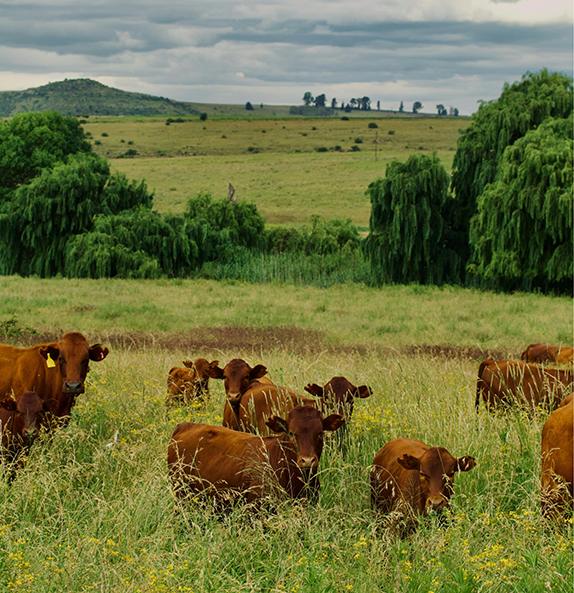
We are blessed to live in one of the world’s largest grassland biomes. The Great Plains was shaped over millennia by the interplay of deeply rooted prairie grasses and forbs (wildflowers) with diverse herds of grazing animals moving across the landscape—helping create the deep, rich prairie soils for which our region is known.
Though Kansas is still blessed with abundant grasslands, wildlife and livestock, the landscape changed drastically with the advent of barbed-wire fencing and the plow. Today, animals are often separated from cropland altogether, with much of livestock production occurring in confinement.
In this final installment of our Soil Health series, the sixth core principle is integrating livestock—one of nature’s primary drivers of biological activity and nutrient cycling across grassland ecosystems.
We’ve already discussed the other Soil Health principles: ecological context, minimizing disturbance, armoring the soil, keeping living roots growing year-round, and building biodiversity above and below ground. Together, these principles help increase soil aggregate stability and feed soil biology through the liquid-carbon exudates released by living roots.
Ultimately, Soil Health aims to restore, revitalize and regenerate life both below and above the soil surface—helping farmers and ranchers build greater drought resilience, reduce weed pressure, and improve plant-soil nutrient cycling. These ecological functions are foundational to truly sustainable agriculture.
What do livestock add?
Our great-grandfathers rotated crops, plowed under “green manures,” and spread animal manure over their fields. Today, we can take that concept much further by intentionally integrating grazing animals into cropping and grassland systems.
Properly managed grazing can mimic important functions of natural grassland ecosystems. Hoof action, grazing, dung and urine stimulate biological activity and accelerate nutrient cycling while returning organic matter and fertility directly to the landscape.
Grazing animals also convert mature, carbon-rich forage into readily decomposable organic matter and nutrients. Dung provides food and habitat for an enormous community of insects, fungi and microorganisms, while urine rapidly returns soluble nutrients to growing plants. Together, these processes help keep nutrients cycling through the farm rather than continually exporting them from the system.
But grazing is far more complex than simply opening the gate and turning cattle loose.
Proper grazing and resource management is as much an art as a science: matching forage availability with stocking density and seasonal conditions while managing fencing, water access, animal performance and adequate plant recovery. Under good management, productivity and profitability per acre can increase substantially as higher stock densities and faster moves are combined with longer periods of rest and recovery.
“Adaptive Grazing Management” has increasingly replaced the older term “Management Intensive Grazing,” emphasizing flexibility rather than following a fixed rotation through paddocks. Producers continually adapt grazing decisions to forage growth, rainfall, animal needs and changing conditions throughout the season.
The traditional grazing principle to “take half and leave half” still has value, particularly in maintaining enough leaf area to protect the soil and support rapid recovery and photosynthesis. Longer recovery periods following grazing allow plants to rebuild root reserves, maximize photosynthetic capacity and produce additional forage before being grazed again.
Bringing livestock back to cropland
As more regenerative farmers plant cover crops and integrate livestock, they are also taking advantage of “off-season” forage production.
Winter rye, hairy vetch, triticale, winter peas and wheat planted following row crops can provide valuable late-winter or spring grazing while keeping living roots in the soil. Summer annual cover crops can provide another grazing window during periods when perennial cool-season pastures slow down.
Even bale grazing—strategically feeding hay across pastures or hayfields—can redistribute nutrients and organic matter across the landscape.
Some producers are even working to break the “hay habit,” extending the grazing season and reducing the amount of nutrients, labor and machinery involved in harvesting, transporting and feeding stored forage. Targeted grazing can also help manage certain weed problems without herbicides. And emerging technologies such as virtual fencing may dramatically reduce the labor required to move portable cross-fencing and manage livestock across larger landscapes.
What about compaction?
One common misconception is that grazing livestock over cropland will inevitably cause irreparable soil compaction. That doesn’t have to be the case.
Kansas State University research incorporating livestock into cropping systems has shown that soil condition and management history matter. Tilled soils with weaker structure can be more vulnerable to compaction from animal traffic, while well-structured, no-till soils protected by cover crops can better withstand livestock impact. Timing still matters—particularly when soils are saturated—but healthy soil structure provides considerably greater resilience.
Want to learn more?
Successful grazing involves far more nuance than we can cover here, but fortunately there are many excellent resources available.
The Noble Research Institute offers both in-person and online grazing and soil-health training. Ranching for Profit remains one of the leading grazing-business management programs in the country. Here in Kansas, the Kansas Soil Health Alliance and Kansas Grazing Lands Coalition host programs throughout the year focusing on grazing management and improving forage quantity and quality.
The Kansas Soil Health Alliance also operates a Grazing Exchange, connecting landowners with cover crops or forage to livestock owners seeking additional grazing opportunities.
K-State Extension also released a revised Livestock Waterers and Watering Systems Handbook in 2024—an excellent resource when planning the water infrastructure necessary for rotational or adaptive grazing systems.
Animals evolved with our landscapes. When livestock are thoughtfully reintegrated into our farms and grasslands—and managed with good stewardship—they become much more than consumers of forage. They become partners in rebuilding the biological cycles that created our prairie soils in the first place.