Mobile Apps Can Enhance 4-H Projects: Emboldening Citizen Science
Nancy Noyes, 4-H Youth Development Program Assistant
Do you have a plant or bird identification app on your mobile device? I would wager if you identify as an “outdoorsy” or a “nature-curious” person, you either have Seek by iNaturalist or Merlin Bird ID; perhaps both! The former is a joint initiative of the California Academy of Sciences and the National Geographic Society. The latter was developed by Cornell Lab of Ornithology.
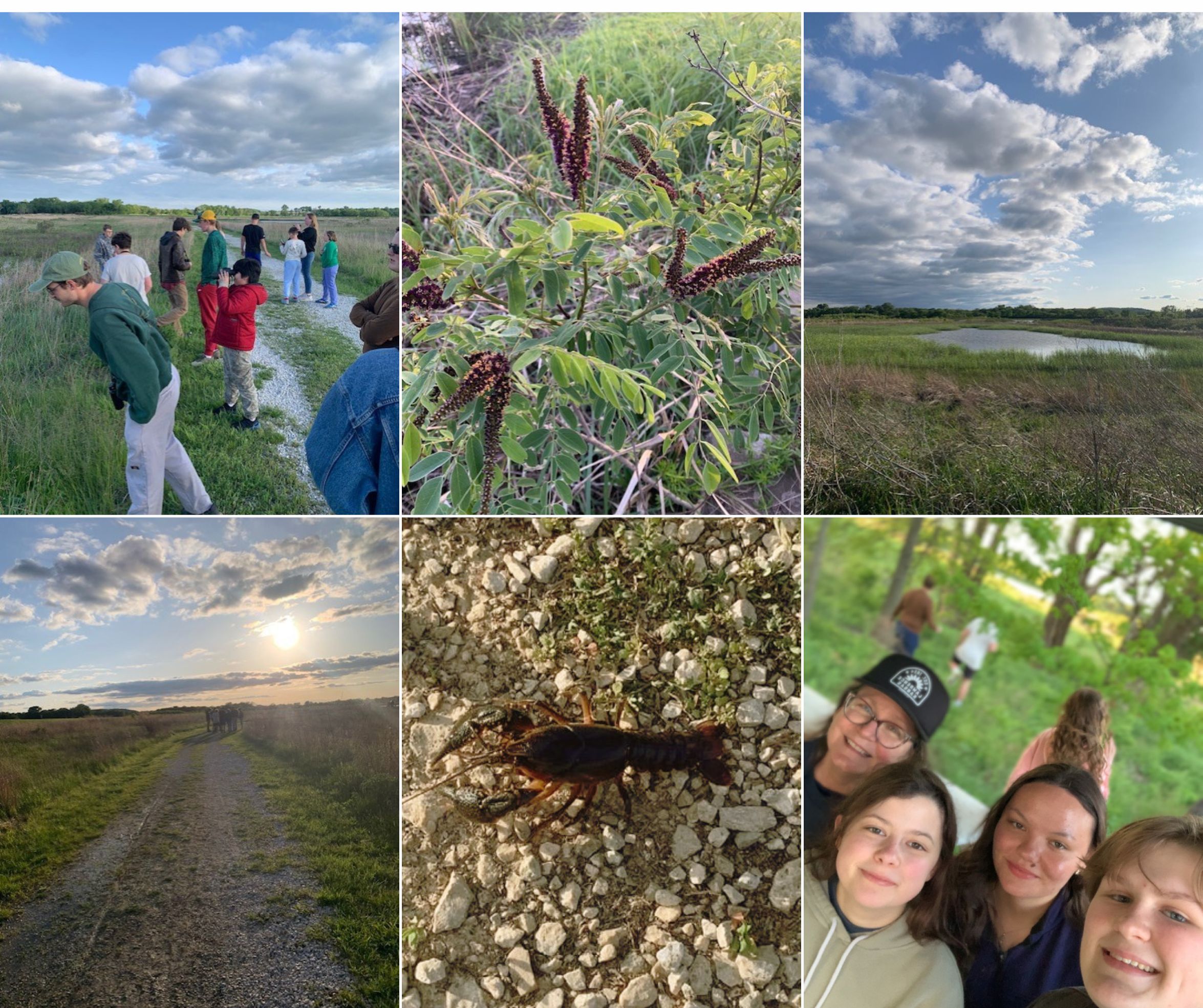
At the end of last month, I witnessed a group-use of mobile devices for a real positive- SCIENCE! Our April Biology & Natural Sciences SPIN session was held at the Baker Wetlands. Our monthly topic was birdwatching. April marks the start of the peak spring migration in Kansas, as over 300 species traverse the Central Flyway. The month is characterized by "waves" of arrivals, with ducks and cranes peaking in early April followed by a surge in shorebirds and songbirds toward the end of the month. Twelve 6-12th grade youth gathered with six University of Kansas postdoctoral mentors from the Ecology and Evolutionary Biology Department to explore, listen, and observe the natural world. In addition, their mentor-leaders provide scientific webpages which are not monetized or filled with advertisements for the group to take a deeper dive into the topic for the month.
Through hands-on activities, county youth explore what it means to be a scientist while learning to identify birds. These activities use the Cornell Lab of Ornithology’s powerful tools, like the free Merlin Bird ID app or EBird. The iNaturalist app mentioned in the beginning is widely considered the best non-commercial option for those avoiding standard AI-only apps. It relies primarily on crowdsourced human expertise or collaborative scientific databases for native plants and wildlife.
Apps enhance 4-H Projects through:
- STEM Skill Development: Apps transform smartphones into "Shazam for birds," allowing youth to practice auditory and visual identification skills instantly.
- Citizen Science Contributions: Data collected by 4-H members through eBird or Merlin helps biologists track species protection and rare sightings, giving youth a tangible role in conservation.
- Accessible Curriculum: Digital guides and "bird packs" allow 4-H leaders to teach birding in any region, even offline, reducing the need for expensive physical field guides.
- Gamified Learning: use points, badges, and digital "collections" to keep young birders motivated during local 4-H challenges.
- Interactive Journaling: Apps complement traditional 4-H bird ID challenges by helping kids fill out nature journals with accurate names and species facts.
The group had a productive and dynamic session, and the two hours flew by as we recorded bird sightings and identified some additional interesting finds: False Indigo bush (Amorpha fruticosa), Prairie crayfish (Procambarus gracilis) and Common Water snake ( Nerodia sipedon).
Our May SPIN session will be a tour of Bowersock Hydroelectric Plant and some water ecology studies of the Kaw River. We are hopeful that the resident beaver and family of otters will make an appearance!